


CONTENTS
RESEARCH AREAS
OCEANOGRAPHIC MEASUREMENTS
ATMOSPHERIC MEASUREMENTS
MARINE BIOLOGY
EQUIPMENT
MEASUREMENTS OF SURFACE WATER PARAMETERS
The surface water parameter data collected by the Ferrybox aboard the PERSEVERANCE vessel provides insight into the quality and physicochemical characteristics of the surrounding water. This information is useful for understanding environmental conditions and ongoing biological processes.
Temperature (SBE38 sensor) and salinity (SBE45 sensor) are among the first parameters analyzed. They provide insight into the thermohaline structure of the water, which directly influences the distribution of marine species and ocean currents. Significant variations in these parameters may indicate seasonal changes or phenomena such as upwellings, which can impact biological productivity.
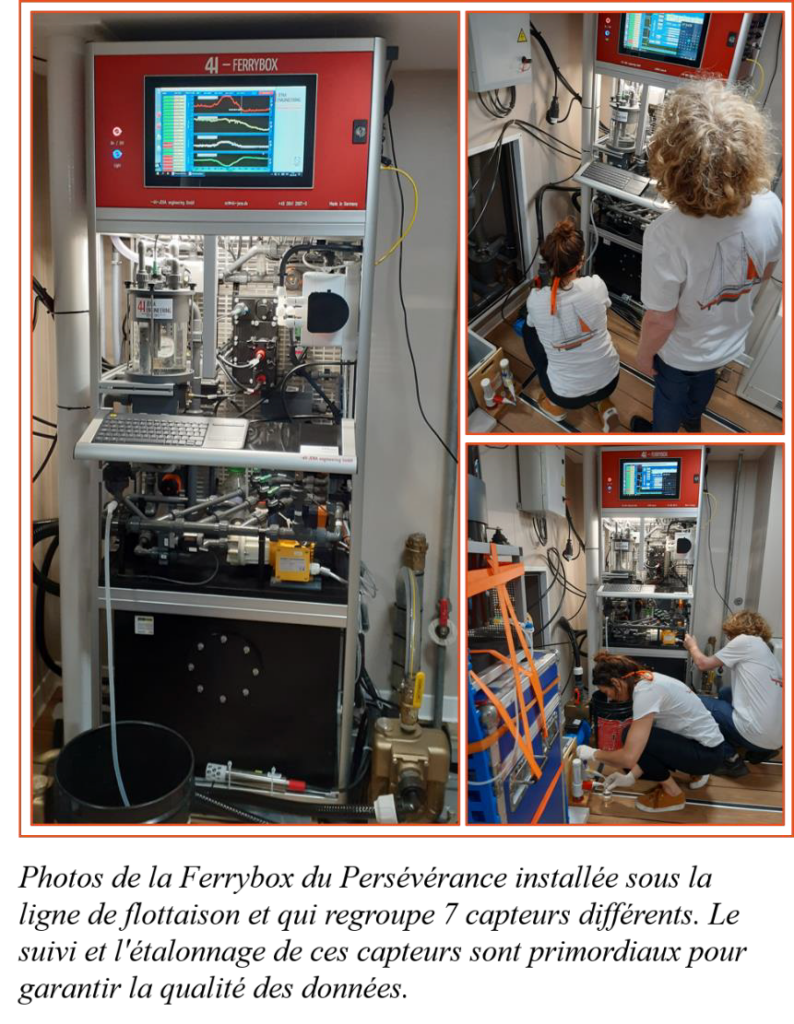 Dissolved oxygen (O2, Aanderaa Optode type 4835) is another important parameter. O2 is vital for life, influenced by factors such as temperature, salinity, and land-sea interactions. Its concentration in seawater results from ocean-atmosphere exchanges, diffusion, and biological and chemical processes such as photosynthesis and respiration of aquatic organisms.
Acidity, measured by pH (ANB sensor), is an indicator of the chemical balance of the water. A pH of 8 is optimal for most marine organisms. Variations in pH may result from natural processes or anthropogenic factors such as pollution.
Fluorescence, which measures chlorophyll concentration, is an indicator of the biological productivity of the water. Chlorophyll is the pigment responsible for photosynthesis in plants and phytoplankton. An increase in fluorescence may indicate a phytoplankton bloom, which is beneficial for the marine food chain.
Turbidity is a parameter that measures water clarity, influenced by the presence of suspended particles. High turbidity may indicate suspended sediments or organic matter, which can affect water transparency and light penetration, thus impacting marine photosynthesis.
Finally, dissolved CO2, or pCO2, is an important indicator of the carbon cycle in the oceans. It plays a crucial role in regulating climate on a global scale and can be influenced by processes such as photosynthesis, respiration, and exchanges with the atmosphere.

