

 HUMANS, AN ANIMAL AT 37 °C
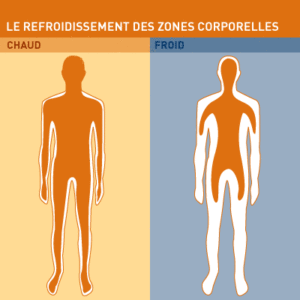
To live, humans must maintain an internal temperature close to 37°C. This is essential for the functioning of vital organs: heart, brain, lungs, liver, kidneys, etc. However, peripheral organs (skin, limbs…) can withstand excessive cold. But beware of frostbite (hands, feet) and internal cooling (hypothermia), which are very serious: the heart stops at 25°C!
A CENTRAL HEATING SYSTEM WITH A THERMOSTAT
The body can fight against cold. Certain skin cells detect a drop in external temperature; immediately, shivers and tremors release energy, and one instinctively curls up to prevent heat loss. The body can also decrease blood flow under the skin and increase heat production (thermoregulation).
Food also helps resist cold (fats, hot drinks…).
TO PROTECT ONESELF FROM THE COLD, ONE MUST… COVER UP!
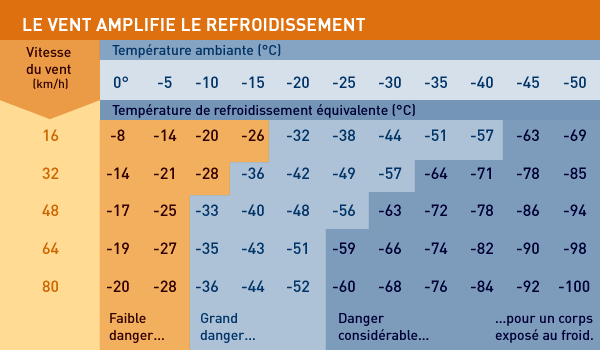
Wind and humidity accentuate the effects of cold on the body, increasing heat loss. To protect oneself, the best insulator is warm, still air. Therefore, one must wear multiple layers of loose clothing and insulate oneself from the outside with a windbreaker; but without sweating to avoid humidity. Clothing must always be adapted to activities!
CAN THE BODY ADAPT TO COLD?
During his solo walk towards the Pole, Jean-Louis Etienne endured extreme cold for weeks. Upon his return, his body temperature could drop to 35.5°C at rest, without consequences: a new equilibrium that allowed for energy savings!

